

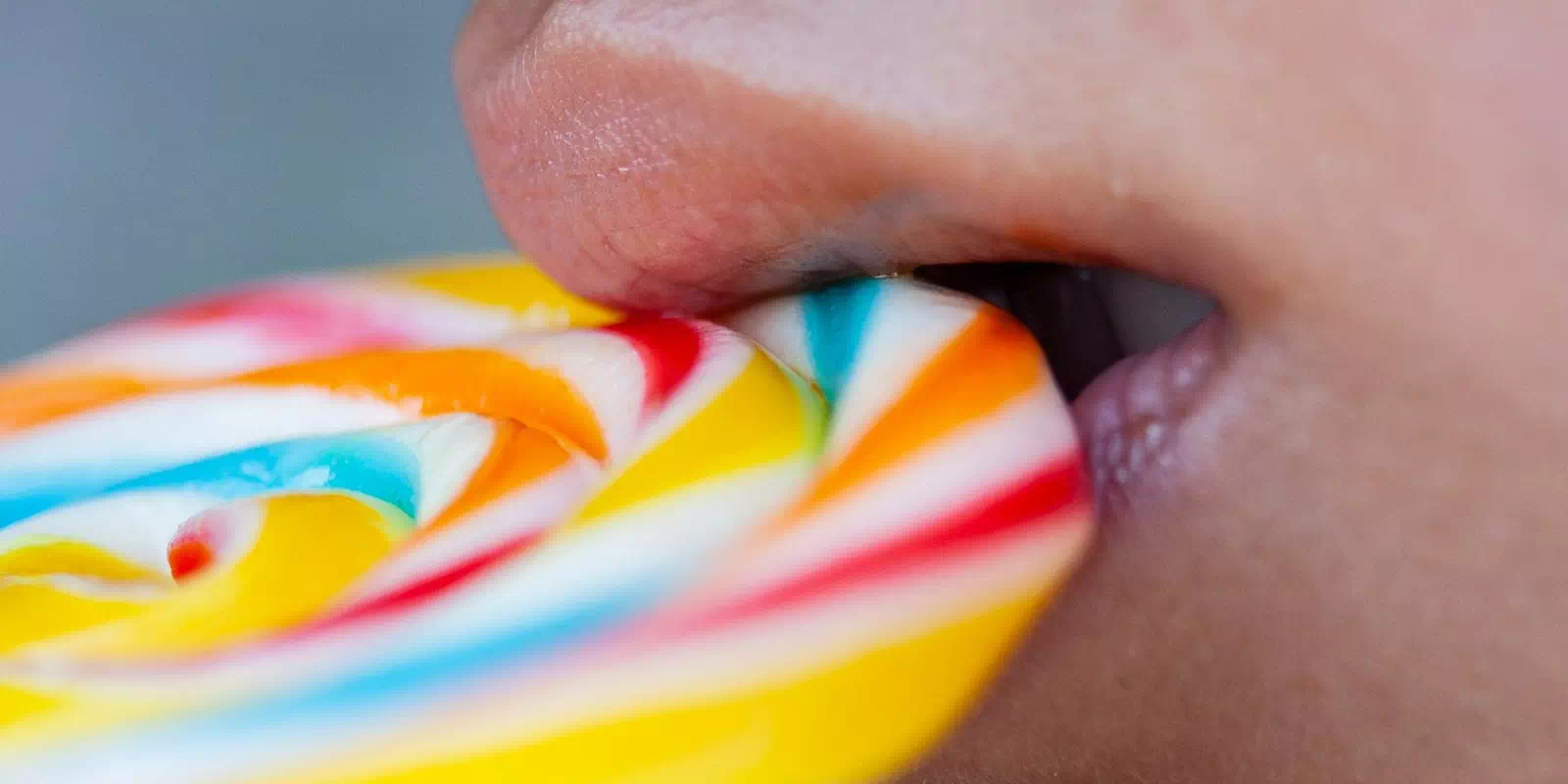
UOne of the best-known benefits of isomalt sugar is that it doesn’t cause cavities. While this is entirely true, let’s examine why. As is well known, isomalt, or isomaltose, has half the calories of sucrose (common sugar). It’s often assumed that this is why consuming it prevents dreaded tooth decay. But nothing could be further from the truth. In this article, we’ll explore why cavities occur, why our teeth become weakened and our enamel damaged, and how isomalt consumption affects oral health.
Why do cavities occur?
When we eat and chew fermentable carbohydrates like sucrose, residue often remains between our teeth that we don’t remove with brushing. Bacterial plaque then begins to produce acids that directly attack the enamel, creating those horrible and painful black holes called cavities.
Another point to highlight is our saliva, which helps to reduce the production of acid in the mouth; the more we salivate while eating, the lower our risk of cavities.
Why do our teeth get damaged?
This is where our pH in the mouth comes into play; the normal or healthiest pH is 7.4. If it drops to 5.5, we would have serious problems with dental demineralization and consequent damage to our teeth.
And what about isomalt sugar?
Having said all this, I’m going to start talking about the benefits of isomalt sugar as a polyol against tooth decay.

The benefits of isomalt
It is anticariogenic
In simpler terms, isomaltose does not trigger tooth decay because the bacteria in the mouth have a very difficult time converting it into the acids that cause cavities.
Isomalt may help repair early tooth decay lesions
Its sweet taste and the chewing action stimulate saliva production, which reduces acidity and increases calcium levels on the tooth surface.
The acidity conditions are optimal.
With isomalt, it’s not possible to achieve a pH lower than the critical point of 5.5 that we’ve already mentioned. Therefore, the demineralization that occurs in our teeth after eating sugar and other fermentable carbohydrates doesn’t happen when chewing isomalt, because isomalt is not a sugar.
And this is why the U.S. Food and Drug Administration (FDA) allows manufacturers of sugar-free products containing isomalt to use the claim “does not promote the development of cavities” if those products do not reduce the pH of plaque to less than 5.7 during the first 30 minutes after consumption.
It is important to emphasize that eating any product in excess is not balanced and healthy; isomalt, like any ingredient, must be taken in moderation, and we must always, always, always maintain proper oral hygiene.





Leave A Comment