

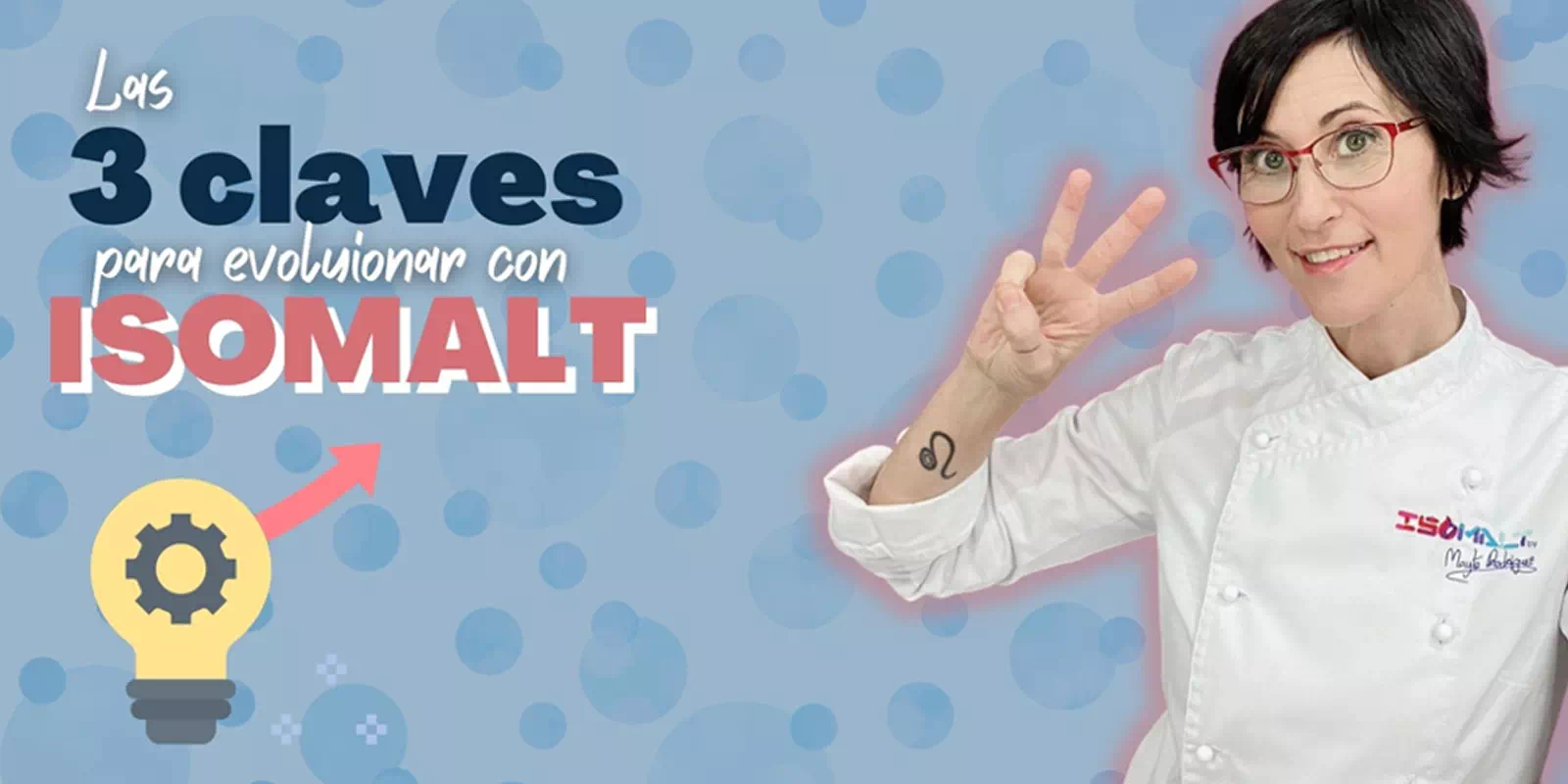
EThe world of isomalt or sugar candy goes far beyond simply learning how to make decorations. Decorations are the final result of all the previous work we’ve done. The cornerstone of isomalt decoration is technique; without technique, you have nothing, whether in the world of isomalt, pastry, baking, or any other field. Learning the technique is when the evolution begins, when you start practicing the techniques you’ve learned. Progress in working with isomalt is rapid if you focus on the essentials, which is what I’m going to explain next.
There are three keys to achieving this evolution in technique. The three keys to evolving with isomalt are TDC.
What is a credit card?
If you want to delve into the wonderful world of isomalt, the TDC system should be your guide.
- Temperature
- Delicacy
- Conservation
Temperature
Temperature is everything; any isomalt decoration succeeds or fails depending on whether you have applied the correct temperature.
Let’s start from the premise that the only time you need to measure the temperature with a thermometer is when cooking isomalt; from then on, you are the thermometer.
You have to learn (and this will come with practice) to visualize and observe isomalt.
Depending on the technique, the isomalt will need to be at a specific density. For example, when making lollipops, it will be in a more liquid state. For drawing, it will be at a harder or cooler density, such as when making flowers. The same applies to blown isomalt, for example, when making blown spheres.
When I tell you that you are the thermometer, it’s because you shouldn’t care what temperature the isomalt is at; you have to touch it or move the jar where you have it and see if it’s ready to do the decoration you need to do.
To give you a couple of examples. You’re making petals for a flower, and the isomalt is too hot. When you try to remove the petal, it’s so unstable that it deforms between your fingers. You manage to remove that petal, but the isomalt is too cold, and when you try to cut it, it breaks.
This is the importance of temperature.
In my courses we work a lot on this topic, learning to visualize and observe it in order to detect the different densities that the piece needs.
Delicacy
Let’s suppose you have excellent temperature control and have created some beautiful isomalt decorations, but when it comes to assembling a piece…crack, you break everything. Delicacy in working with isomalt also requires practice. You have to learn to be aware of the pressure you apply with your hands, control your hand, and always remember that you are handling a very delicate material. It’s pointless to have made some exquisite isomalt flowers if, when you’re assembling them, you break all the petals.
My advice: Make isomalt shapes or petals for no particular reason, without looking for a specific decoration, and assemble them. But when you do this, you have to pay more attention to your hands than to the decoration itself.
Conservation
Let’s assume you control the temperature of all the techniques and that your hands are extremely delicate, nothing breaks, you’ve made some spectacular isomalt decorations and the final result of your piece is amazing.
Preservation is essential to ensure all your work has the quality it deserves. Preservation at every stage of the process.
It’s no use having done an exquisite job with isomalt if it doesn’t last at all afterwards, so your new best friend should be calcium chloride.
So from now on, this should be your guide if you want to evolve in the isomalt technique!
Here’s a video where I explain it:





Leave A Comment