


EIn this article you will learn the best way to create color gradients with isomalt sugar, and I’ll start by making a first note: isomalt, as an ingredient or raw material, can be adulterated.
When I use the phrase ” it can be adulterated, ” I mean that other ingredients or materials can be added without destabilizing the structure of the isomalt. What are these materials or ingredients? Well, flavorings, aromas in different forms, and food colorings. Having said all this, it’s important to emphasize that while it is possible to adulterate isomalt sugar, it’s also true that the fewer external elements we add, the purer it will be, as well as the stronger and more solid its structure will be, and it won’t lose its shine.
Why am I explaining this before we begin today’s topic? It’s simple, it’s the first thing you’ll learn: when you want to color isomalt, you should always try to achieve the desired color effect or intensity with the smallest possible amount of food coloring.
What is a color gradient with isomalt sugar?
General concepts
A color gradient, generally speaking, is a range of colors arranged linearly to visually create a smooth and progressive transition of the same color between the lightest and darkest shades. It could also be defined as the transition between two or more colors.
Let’s look at it with two examples.
Example 1: Single-tone gradient
If we use a single color like violet, for example, there will be a gradient when we go from the lightest violet shade to the darkest violet shade.

Example 2: Two-color gradient
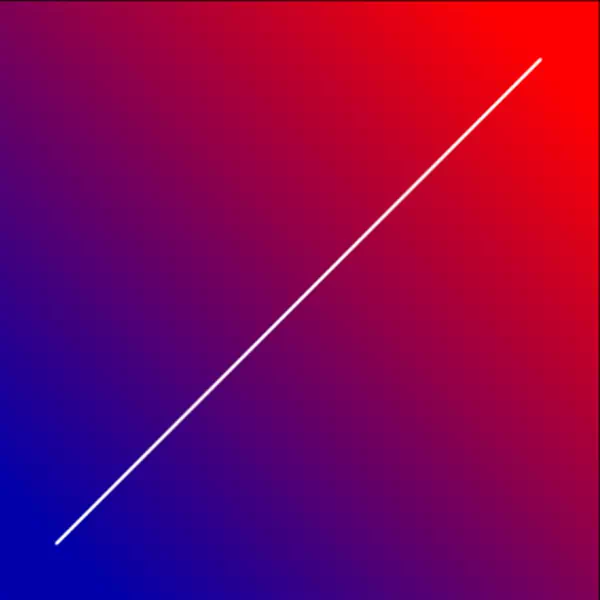
If we want to create our gradient with two colors like red and blue, we will make the percentage of blue vary from 100% to 0%, inversely proportional to the percentage of red.
How do we do this process with isomalt sugar?
The first logical approach that might come to mind is to create the gradient starting with isomalt sugar without any coloring, i.e., transparent, and gradually adding coloring until you achieve the desired effect. However, I don’t recommend doing it this way because by the time you reach the darkest part, the isomalt will have too much coloring, which can disrupt the sugar’s structure.
So, what’s the correct procedure for creating a gradient? My advice is to do it with isomalt itself. Let’s explore this idea further; keep reading, and I’ll explain how.
We start from the premise that isomalt sugar, being a transparent material, is ideal for achieving very intense colors using a small amount of dye.
Let’s take an example
If, for example, we want to dye isomalt sugar an opaque violet shade, knowing—and if you don’t know, you can always take a look at my article on isomalt and color —that to make an opaque color with isomalt (one that doesn’t transmit light) we will need white food coloring and violet food coloring, what we must do to obtain the gradient is:
- First, dye the isomalt white.
- Second, dye more isomalt in violet color.
- Third, once we have obtained the two colors, we will mix a quantity of white with a small quantity of violet in an empty jug, so that we obtain a light violet tone.
- Once the light violet tone is obtained, we will continue to dye other parts of isomalt sugar, adding more violet each time to darken the mixture.
With this simple process we will achieve a very striking gradient using very little food coloring and preserving the isomalt sugar with maximum purity.
Since a picture is worth a thousand words, you can see how to achieve the gradient effect by playing the video below.
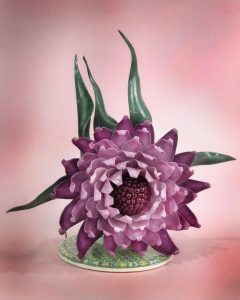
And finally, the end result! In the photo below you can see an example of how the gradients look in an isomalt sugar decoration.
Amazing, right? Now you have all the information you need to start practicing your gradients. If you decide to follow my advice or if you have any questions, you can share your experience by leaving a comment on this page.
Until the next post.








Leave A Comment