

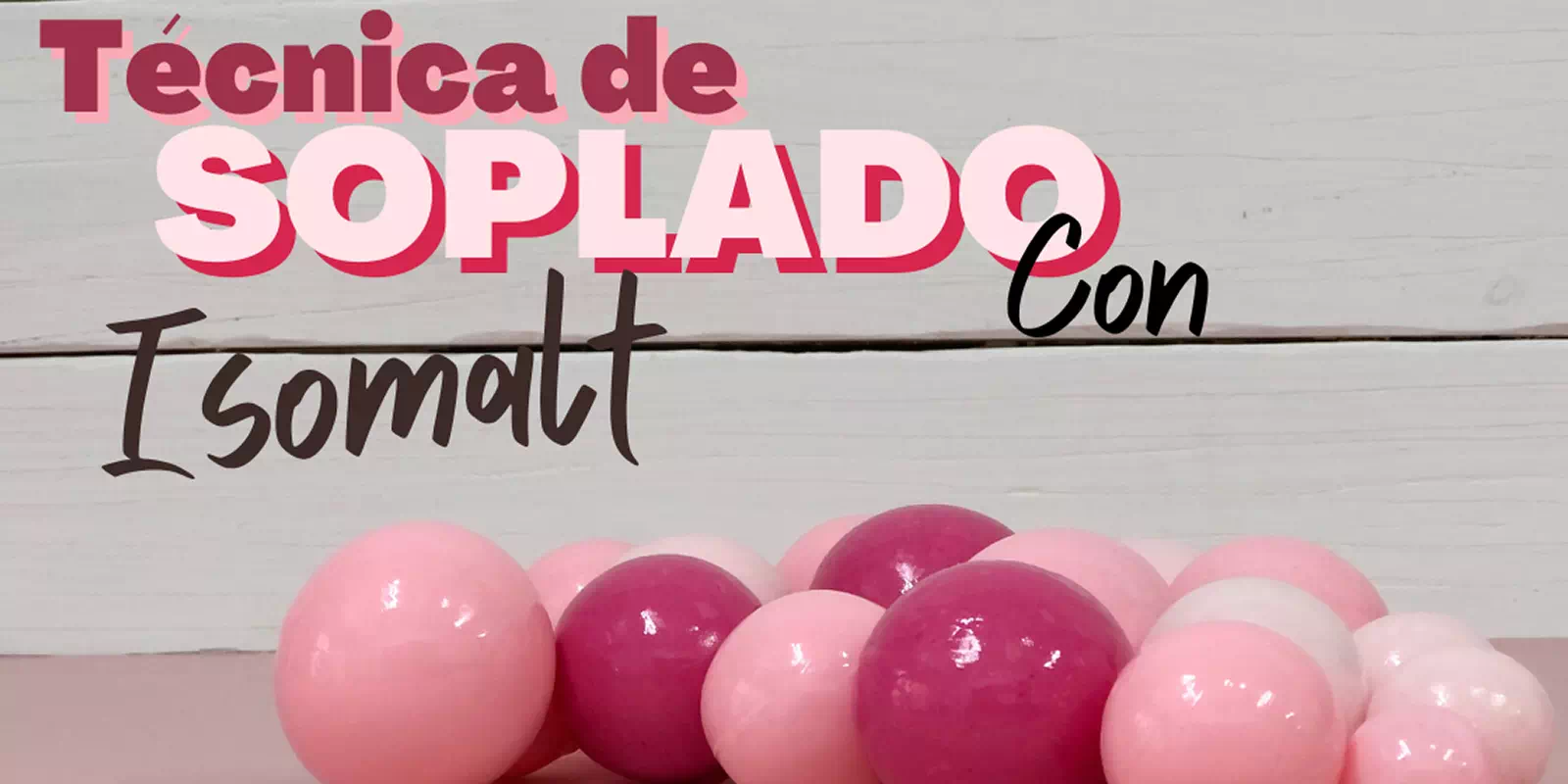
LThe candy blowing technique is one of the most challenging, requiring considerable practice to master. It’s used when creating relatively large pieces with the goal of minimizing their overall weight. The technique involves introducing air into a piece of candy, shaping it in various ways, controlling the candy’s temperature to create the piece, and blowing air as it cools. Before delving into the technique, I’ll share a bit of its history, which is quite fascinating.
Origin of the candy blowing technique
I have to say that there’s not much certainty about its origin, and depending on where you look, you’ll find different opinions. Some say that the candy-blowing technique comes from the glass-blowing technique itself. Glassblowing dates back to the 1st century BC in the Syrian region, spreading throughout the Mediterranean thanks to the Roman Empire. The most plausible theory is that the candy-blowing technique comes from China, from the famous “Candy Men.”
Who are the candy men?
The art of blown candy originated during the Song Dynasty (960-1279), though some believe it dates back three centuries earlier, to the early Tang Dynasty (618-907). This is why this type of candy is known as “Tang Ren.” The Chinese character for Tang, referring to that dynasty, is pronounced exactly like the word for candy (tang), while Ren means man, referring to the artisan who makes it. Both terms refer to both the art of blown candy and the master who practices it. These artisans are called “Candy Men.” The birthplace of this technique is Dezhou, in Shandong Province. Today, you can still see these Candy Men at markets and fairs throughout China.
Let’s get more up to date…
Until not so many years ago, candy makers used to blow candy in the most spectacular way. With a long copper tube and using all their lung power, they would blow, creating the artistic candy piece. I’ve tried it, and I assure you, you need strong lungs to blow through that tube. Years ago, it was banned here in Spain for health reasons, and we switched to using blow guns. Here’s a photo of Paco Torreblanca, one of our great masters here in Spain, blowing candy with a tube.

And how are we doing today?
These days we blow air into the candy using a blower or air blower. As I explained earlier, the idea is to introduce air into a piece of candy using the air blower. The air blower consists of three parts: the air injector bulb, the rubber tubing, and the copper tube or cannula. We take a candy ball and make a small hole in it. We place the tip of the cannula inside the hole and close it, being careful not to seal the opening completely so air can enter. We then introduce air by gently pumping the air injector bulb.
Important to keep in mind…
- When we blow, we should do it in front of a fan or hair dryer with cold air.
- The piece of candy we pick up to blow on must have the same temperature throughout; there cannot be parts that are colder or hotter than others.
- We must blow while cooling; never blow if the caramel feels too hot or unstable.
Common mistakes when blowing out candy
- The isomalt is too hot.
- That isomalt does not have a well distributed uniform temperature.
- The copper cannula is too hot.
- Once we start blowing, we think we shouldn’t stop blowing, but that’s not the case; we have to carefully control every bit of air that comes in.
- We don’t use a fan or hairdryer to cool the piece while we blow on it.

I understand the fears and doubts you might have when trying this technique for the first time, but I assure you that with practice and perseverance, you can master it. I hope this article has at least encouraged you to give it a try.











Leave A Comment