

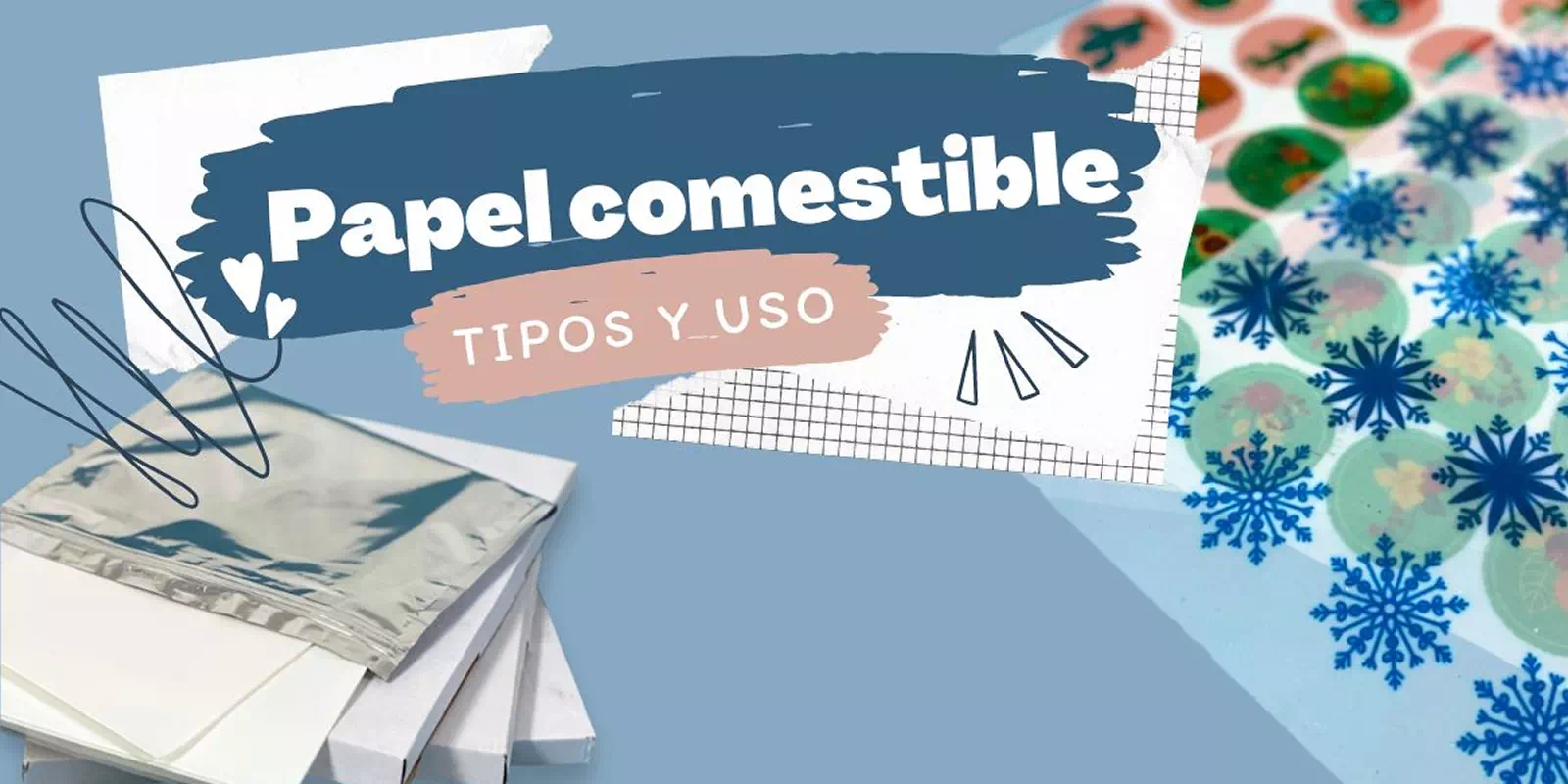
EEdible paper for making edible prints is widely used in the world of baking, especially for cake decorating. I started using it years ago with isomalt and became completely hooked on its effects, but although it’s still widely used today, I’m aware that there are many questions surrounding it.
Questions about each type of paper, whether or not they can be used with isomalt, and their aesthetic effects. In this article, I’m going to clarify the types of edible paper available on the market and which ones you can use with isomalt. Until not too long ago, in the world of pastry, only rice paper or wafer paper was used, especially when the trend of putting printed images on cakes began. Companies started innovating, and several types of edible paper appeared on the market, but they weren’t very successful and eventually disappeared, like fondant paper, for example.
Of course, all edible prints must be printed with edible inks. Currently, four types are the most common on the market, although not all of them can be used with isomalt. Let’s take a look.
Sugar paper
Sugar paper is a very flexible sheet with a light vanilla flavor and a protective plastic coating. When printed on, the image quality is excellent and very sharp.
When using the printed image, simply remove the protective plastic and cut it out easily with scissors. Its flexibility and consistency make it very versatile. You can use it for cakes, cookies, chocolate, lollipops, and more.
When using sugar paper, the print is transferred to the decoration. The sheet adheres and stays on whatever you’re decorating. As for isomalt, sugar paper withstands the high temperatures perfectly, making it a great option.

Transfer paper
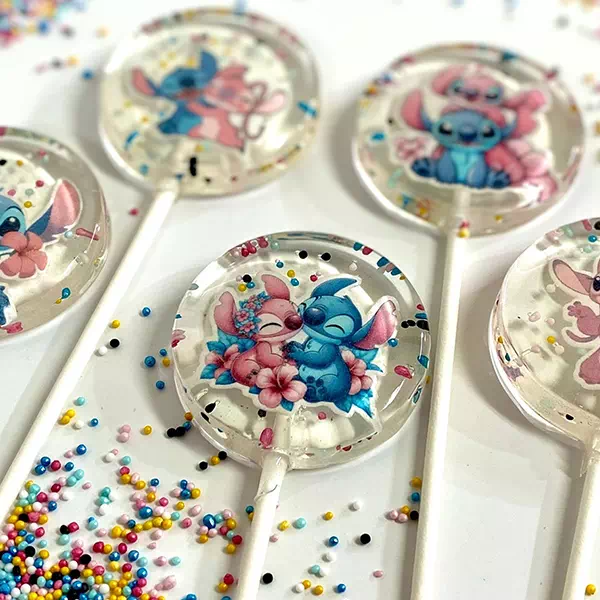
It’s a sheet of heavy-weight film (the plastic) with a white backing where the design is printed. The transfer is a printing process that transfers the printed image to the surface; it’s like a decal.
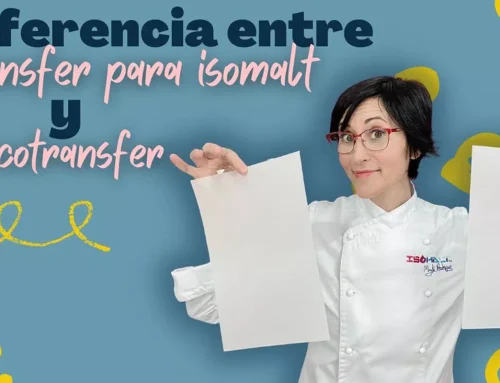
The designs and drawings come out with excellent quality and sharp clarity. Although the sheet is very similar or practically identical to that of a chocolate transfer sheet (I will detail the differences between transfer sheets and chocolate transfer sheets in another article), there are some differences between them. It can be used with isomalt, white chocolate, meringue, gelatin, and doughs.
The transfer sheet must always be used with heat. The temperature is what makes the design transfer. You can either apply it while it’s hot, and once it cools, remove the film, leaving the design adhered, as with isomalt, chocolate, or gelatin; or you can apply it while it’s cold and then heat it to make it adhere, as with meringue or pastry. In either case, you must always remove the plastic once it’s cold. These types of edible prints are my favorites… I confess…
Rice paper or wafer
Rice paper or wafer paper is a stiffer sheet, resulting in lower print quality and less sharpness. It is less humid, making it more fragile.
It can be used to cover cakes or as a topping for images, for cookies, or to make flowers, among other things. Regarding isomalt: it cannot be used with isomalt because it cannot withstand the heat. When in contact with hot isomalt, the sheet warps and wrinkles, making it impossible to use for certain decorations.
There’s a way to use it with isomalt, and that way is cold. Let me explain. If, for example, you wanted to make lollipops decorated with rice paper, you would have to place the printed image on the lollipop once it’s cold.
Once the lollipop is cool and you have the rice paper cut to the size you want to put on the lollipop, you would have to put edible glue on the lollipop and stick the printed paper on. Well…it’s one option.
Chocotransfer
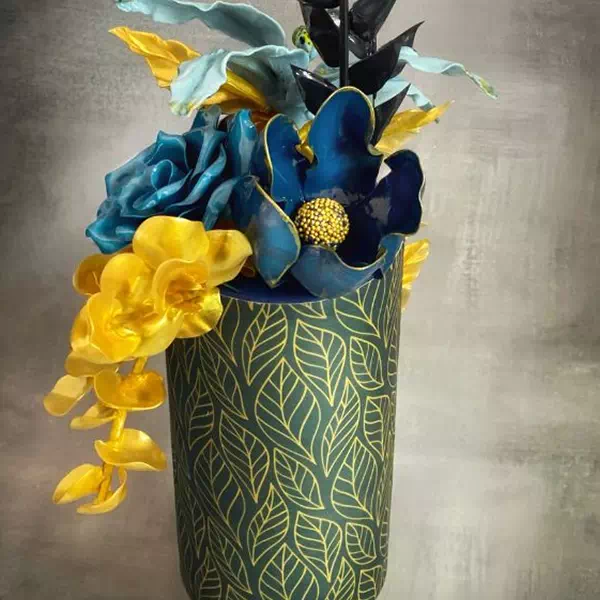
This is a sheet used to transfer designs or drawings onto chocolate. It cannot be used with isomalt. As I mentioned before, although the sheet looks very similar to transfer paper, this type of printing cannot be done with isomalt.
I hope this article has helped you and that you now have a clearer understanding of the differences between the edible papers available on the market. Now you just have to choose the option you like best depending on the effect you want to create.
I’ve included a video where I explain it in detail:


Leave A Comment