

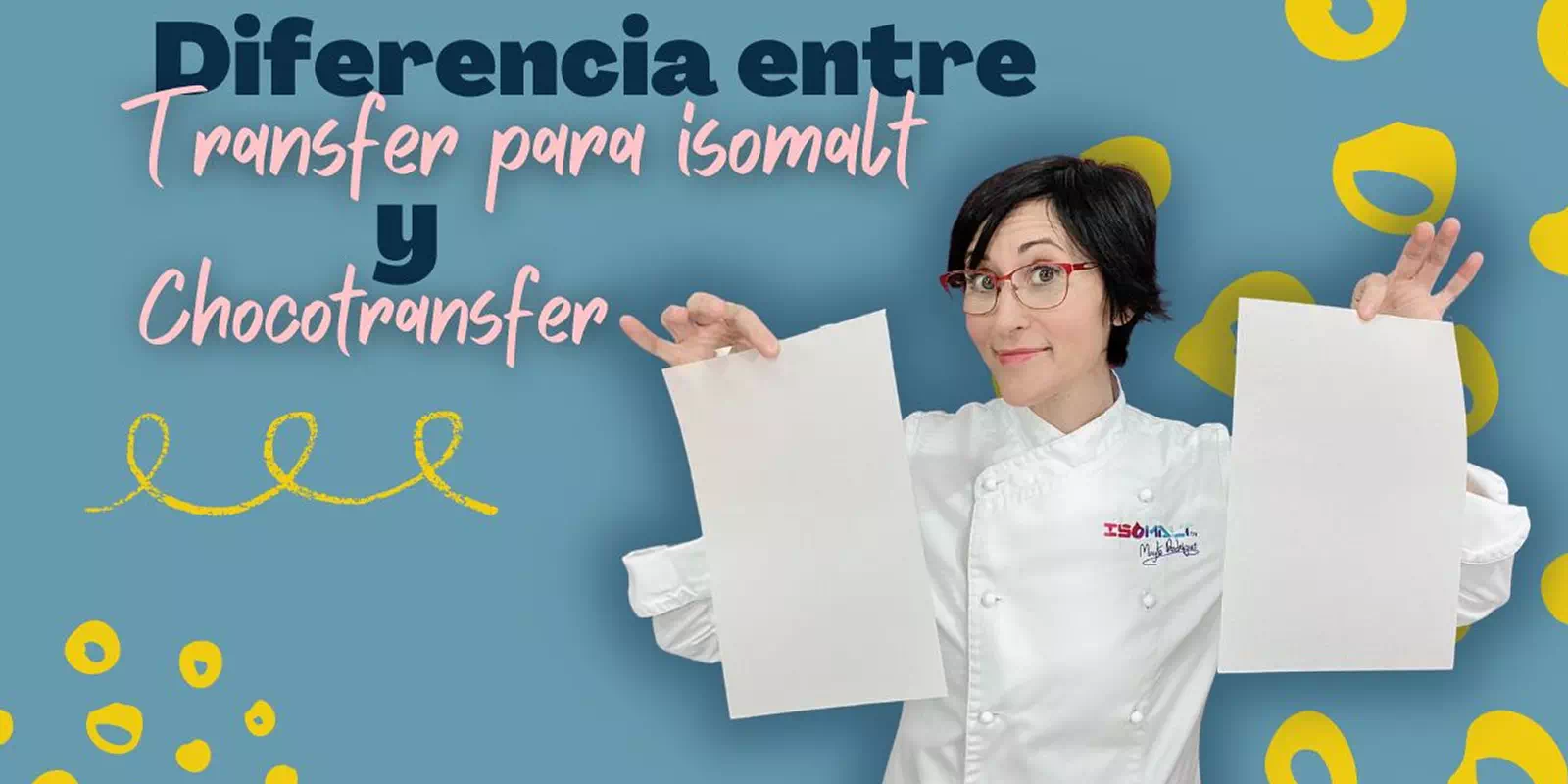
HThere are two types of edible transfer prints on the market, chocotransfer and isomalt transfer, and although they may look the same, there are big differences between them.
Which one can I use with isomalt?
Both types are used to transfer designs onto the raw material being worked with, creating a tracing of the drawing. Chocotransfer is only used with chocolate, while isomalt transfer can be used with other ingredients or preparations besides isomalt. Both sheets consist of a plastic backing that supports the printed film, onto which the chosen design is printed. The print is transferred using heat; in both cases, heat is required so that once it cools, the design is transferred.
Of course, all edible prints must be printed with edible inks. Currently, four types are the most common on the market, although not all of them can be used with isomalt. Let’s take a look.
What makes them different?
• Chocotransfer
The plastic sheet is acetate. Acetate is a material that doesn’t withstand high temperatures, making it unsuitable for working with isomalt due to the temperatures involved. Acetate is perfect for working with chocolate because chocolate is processed at relatively low temperatures.
The whitish film where the design to be transferred is printed has a fat content, which makes it adhere better to the chocolate, and the ingredients that compose it allow you to transfer any colorful design onto any type of chocolate, whether dark, milk or white.
• Transfer for isomalt
The plastic sheet isn’t acetate; it’s cling film, the kind we use to wrap or cover food. The only difference is that, in this case, it’s thicker. This allows it to withstand high temperatures, such as those found in isomalt or an oven.
The whitish film on which the design is printed has no added grease, making it perfect for working with isomalt, as grease and isomalt don’t mix well. This type of paper isn’t limited to isomalt; it can also be used with meringue to make dried meringues, with gelatin, with dough, and with white chocolate.
Yes, you read that right, you can also use white chocolate; the design transfers well, even without added fat. Be careful, though, because it won’t work with dark chocolate. The design will transfer, but because it’s translucent, it will disappear into the darkness of the chocolate. The transfer needs a transparent or white base for the design to look perfect. This type of transfer has different names depending on the brand, company, or country that sells it: transfer, multitransfer, sugar stamp, wonder sheet, transfer sheet…
I imagine that after reading this article you have realized that the isomalt transfer is much more versatile, giving you the option of using it with many more materials.
In our online store, you can find pre-designed edible prints on labels and patterns. You can also request that we print your own designs. New this year, we now offer blank transfer paper for you to print on yourself, available in individual sheets or packs of 25. If you’d like us to print your own designs, please send us an email to info@isomaltmayterodriguez.com.
I’ve included a video where I explain everything:
Links that might interest you:
Printable transfer pack of 25 units
Transfer for printing loose sheets
Articles that might interest you:


Leave A Comment