

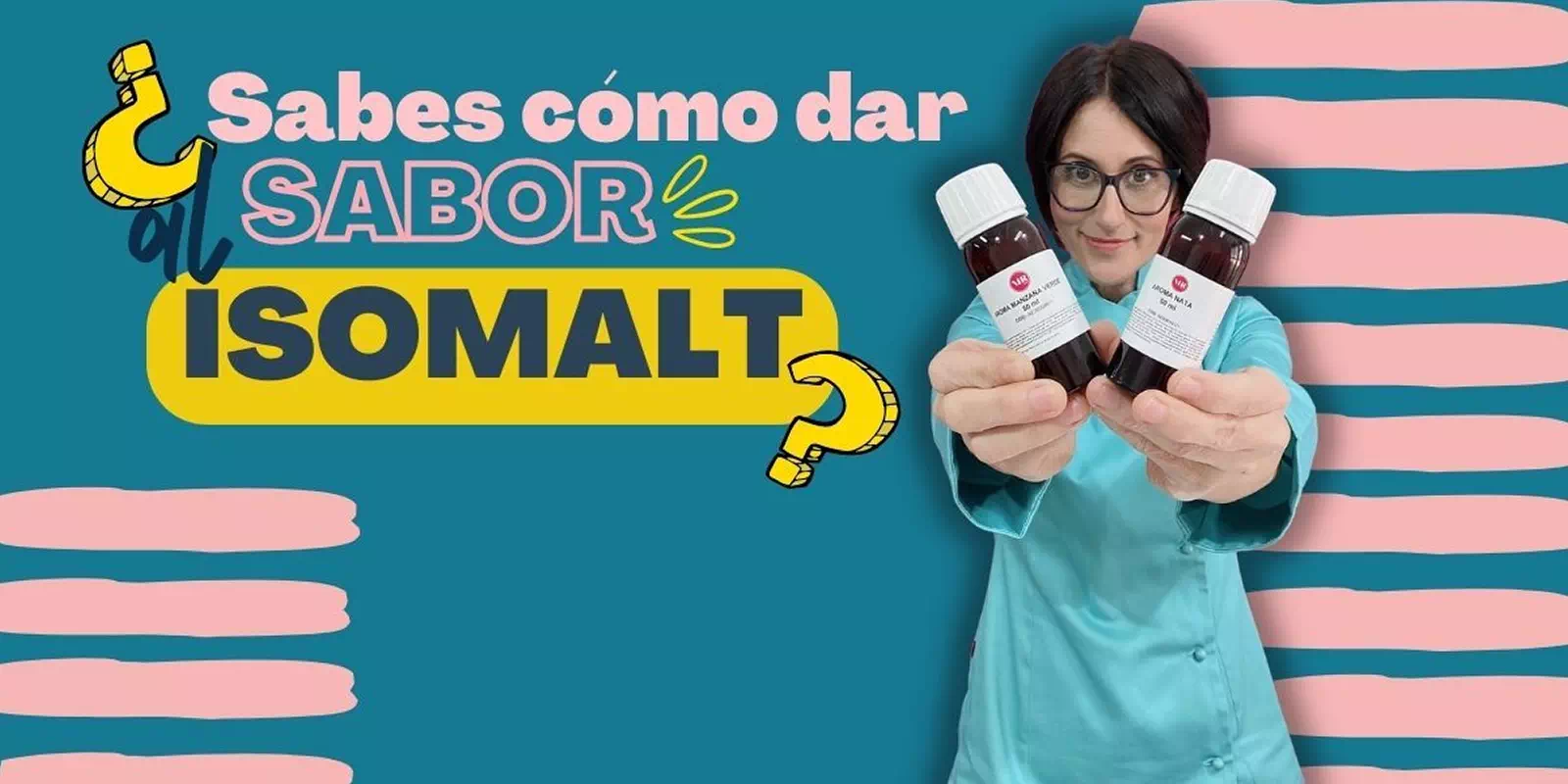
EIsomalt is sweet, but it doesn’t have a specific flavor like sugar. This is where food flavorings come in to flavor isomalt and enhance its taste. With food flavorings, we can give isomalt different flavors according to our preferences, from fruity to sweet, acidic, and so on, instead of just the simple sweetness of isomalt itself.
Types of food flavorings
There are two types of food flavorings or essences, differentiated by their base: water-soluble and oil-soluble. Oil-soluble flavorings are those made with an oil base, so they are NOT suitable for use with isomalt, as isomalt and fat don’t mix well. Water-soluble flavorings are those made with a water or alcohol base, making them perfect for use with isomalt. The flavoring label will indicate whether it is oil-based, water-based, or alcohol-based. I’m not going to say that some food flavorings or essences are better or worse than others, but I will differentiate them by their intensity. There are concentrated and super-concentrated food flavorings. We’ll take this with a grain of salt because, although the concentration will determine the amount you need to use, it will depend on the desired flavor intensity.
What I mean is that, although the manufacturer recommends using 2ml per kilo, you can often add a little more if you want a stronger effect without any problem, or conversely, you might need to use less. You’ll have to experiment to find what works best for you.
On the other hand, they also differ in the color of the liquid flavoring. Some brands offer flavors where the liquid is also colored. For example, an orange flavoring where the liquid is orange, or a strawberry flavoring where the liquid is red. This color aspect shouldn’t be a problem as long as you don’t mind the color of the product you’re flavoring it with changing. If, however, you don’t want a color change, these flavorings wouldn’t work for you. For example, if you want completely transparent and crystal-clear strawberry-flavored lollipops, in this case, a red flavoring wouldn’t work; you would have to use a colorless flavoring.
Tips for using food flavorings to flavor isomalt
The isomalt needs to be very hot, therefore very liquid. The hotter the isomalt, the better the aroma will integrate. You’ll see that when you add the aroma, it will start to bubble a little and become slightly cloudy; don’t worry, this is simply the reaction caused by the contrast in matter and temperature. Let it sit for a few minutes before using it to allow it to stabilize. If you have a heat lamp, that’s ideal because it will stabilize without losing much heat. If you don’t have a heat lamp, you’ll need to reheat the isomalt before using it.
If you notice a bitter, medicinal aftertaste when you add the food flavoring, it’s because you’ve used too much. Don’t worry, you don’t have to throw it away; simply add more unflavored isomalt to dilute it. This way, it won’t have that chemical taste anymore.
Our food flavorings
In our online store, we offer super-concentrated, colorless flavorings, perfect for adding intense flavor to isomalt without coloring your decorations. Our flavorings aren’t just for isomalt; we use them with cakes, creams, ice cream, buttercream, meringue, whipped cream, cookies, syrup… and the results are spectacular! Have you used them in any other recipes? Tell us about it!
I hope that from now on you’ll have a clearer understanding of how to use food flavorings to flavor isomalt. Here’s a video where I explain everything:








Leave A Comment